
Colorado Springs sits at 6,035 feet above sea level, nestled at the base of Pikes Peak and surrounded by terrain that makes it one of the most scenically dramatic places to drive in America. Garden of the Gods to the west, Black Forest to the north, Cheyenne Mountain to the south — getting anywhere in this city means navigating elevation changes, steep descents, and roads that shift from dry pavement to icy black ice within the same commute.
That geography is beautiful. It’s also genuinely hard on brakes in ways that flatland drivers never have to think about.
If you live and drive in Colorado Springs, regular brake inspections aren’t optional maintenance you can defer until something squeals. They’re a direct response to the specific terrain, weather conditions, and driving demands this city puts on your braking system every single day. Here’s exactly why — and what to watch for before a brake problem becomes a brake emergency.
The Elevation Factor: Why Colorado Springs Is Different
Most cities sit at or near sea level. Colorado Springs does not, and altitude affects your vehicle in ways that compound the already significant demands of mountain terrain driving.
At elevation, the air is thinner, which means your engine works harder to produce the same output as it would at lower altitudes. More relevant to braking specifically: thinner air affects how your engine behaves on long downhill stretches. Engine braking — the natural slowing effect of a closed throttle in gear — is slightly less effective at altitude because the engine is working against thinner air. That means your brakes carry a higher share of the load on every significant descent.
Colorado Springs drivers also experience dramatic temperature swings that few other cities match. A February day in the Springs might start at 5°F, climb to 55°F by afternoon, then drop back toward freezing by evening. This thermal cycling is relentless on brake components. Rotors expand and contract with temperature changes; brake fluid absorbs moisture over time and has a lower effective boiling point as a result; rubber seals in calipers harden and crack from repeated freeze-thaw exposure. These effects accumulate quietly over months and years of Colorado driving.
Mountain Terrain and What It Does to Your Brake Pads
Here’s the core mechanical reality: brakes convert kinetic energy into heat through friction. The steeper the descent and the heavier the vehicle, the more heat is generated. In a city like Colorado Springs, where dropping from the Broadmoor area toward downtown involves real elevation change, or where drivers regularly navigate the ascent and descent routes toward Manitou Springs, Woodland Park, or Cheyenne Mountain State Park, brakes are absorbing substantially more energy per mile than the same vehicle would in a flat city.
The consequence is accelerated brake pad wear. Pads that might last 40,000 miles in a flatland city may realistically need replacement in 25,000 to 30,000 miles on a Colorado Springs vehicle that regularly navigates elevation changes. The heat also affects rotors — repeated high-heat cycles cause rotor warping, which you’ll feel as a pulsating or vibrating brake pedal under moderate application.
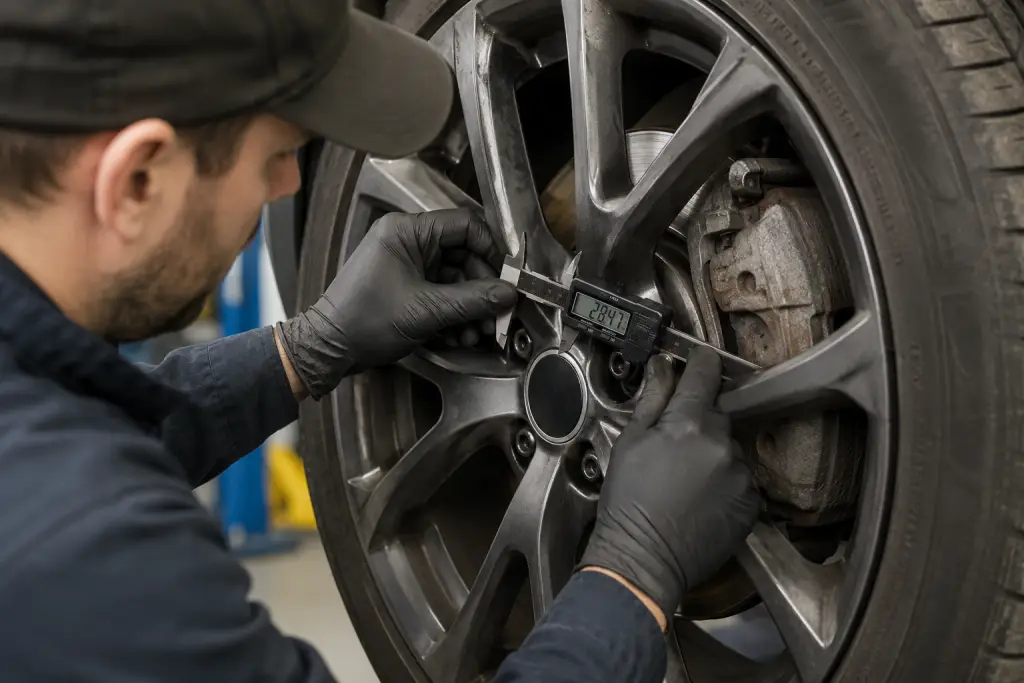
Our brake service in Colorado Springs covers the complete system — pad thickness measurement, rotor runout and wear inspection, caliper function and slide condition, brake fluid quality, and a full safety check — performed at your home or office anywhere in the Springs. For drivers who regularly travel routes with significant elevation change, we recommend a brake inspection every six months rather than the standard annual check. The terrain here earns it.
Winter Conditions: The Ice, Salt, and Cold Combination
Colorado Springs gets real winters. Cold Front Peak and Palmer Divide to the north funnel arctic air into the city with very little warning, and the Springs’ elevation means snowfall accumulates faster and hangs around longer than many Colorado Front Range cities. Add the freeze-thaw cycle that turns morning snow into afternoon slush and overnight ice, and you have driving conditions that demand brakes in top working order consistently from November through March.
Road salt and sand applied during winter weather events accelerate brake corrosion significantly. Salt is electrochemically aggressive toward the metal components of your brake system — rotors, caliper hardware, brake lines, and the steel backing plates on brake pads all deteriorate faster when repeatedly exposed to road salt. Over several winters, this corrosion works into caliper slides and pins, causing them to seize and create uneven pad wear and brake drag that wears components far ahead of schedule.
Brake fluid moisture absorption is a specific winter concern that deserves more attention than it typically gets. Brake fluid is hygroscopic — it absorbs moisture from the air over time. In Colorado Springs’ humid winter conditions, combined with temperature swings that promote condensation inside brake lines, fluid moisture contamination increases faster than in dry climates. Water-contaminated brake fluid has a significantly lower boiling point, which means during hard braking on a steep descent, there’s a real risk of brake fade — where fluid briefly vaporizes under extreme heat and your pedal suddenly goes soft or to the floor.
Black ice is one of the most specific Colorado Springs winter hazards. A road that looks dry can carry a thin, invisible layer of ice on shaded sections, particularly on north-facing grades near Cheyenne Mountain, Monument, and Woodland Park approaches. Brakes that are already operating with thin pads or corroded rotors will perform noticeably worse when ABS is cycling over icy surfaces, and stopping distances increase dramatically. This is not the moment to discover your brake system was overdue for service.
The Warning Signs Colorado Springs Drivers Often Dismiss
Because Colorado Springs residents are accustomed to challenging driving conditions, there’s a tendency to normalize brake symptoms that should actually prompt immediate attention. Here’s a clear breakdown of what each sign means:
High-pitched squealing under braking — This is typically your wear indicator tab doing exactly what it was designed to do: alert you that pads are approaching minimum thickness. In Colorado Springs’ conditions, don’t wait on this. The squeal is your early warning; the grinding sound that follows is damage already happening.
Metal-on-metal grinding — Your pads are fully worn through and metal backing plates are contacting rotors directly. Every braking event from this point is scoring your rotors, turning a pad replacement into a pad-and-rotor replacement. Address this immediately.
Vibrating or pulsating pedal — A pedal that pulses or shudders under braking indicates warped rotors from excessive heat cycling — extremely common in Colorado Springs given the elevation change and temperature variation. Warped rotors don’t improve on their own; they need resurfacing or replacement.
Pulling to one side during braking — A seized caliper, uneven pad wear, or contaminated brake fluid on one side causes your vehicle to track sideways under braking. On an icy or snow-covered road, this lateral pull during emergency braking can spin a vehicle before the driver has time to correct.
Soft or spongy brake pedal — This almost always indicates moisture contamination in the brake fluid, a developing leak in the hydraulic system, or caliper seals that are beginning to fail. In Colorado Springs winter conditions, a compromised hydraulic system is a safety emergency.
Longer stopping distances — If you’ve noticed your car needs more space to stop than it used to, your entire brake system deserves a professional inspection. Worn pads, degraded fluid, and corroded hardware all contribute to extended stopping distances that become critical when road conditions deteriorate.
How Altitude Affects Your Engine — and Why That’s Also a Brake Issue
Here’s a connection that surprises many Colorado Springs drivers: your engine’s performance at altitude directly affects how hard your brakes have to work.
At 6,000 feet, naturally aspirated engines produce roughly 15 to 20 percent less power than at sea level due to reduced oxygen density. On long mountain grades — toward Woodland Park on US-24 is a good example — an engine that’s already laboring to maintain speed uphill will provide less engine braking effect on the way back down. The result is that your brakes carry a higher proportion of the deceleration load on descents than they would in a vehicle operating at lower altitude.
For turbocharged vehicles, altitude compensation is better, but the fundamental physics of brake-generated heat remain. More load on the brakes means more heat, more wear, and greater importance of having pads, rotors, and fluid in optimal condition before you commit to a mountain route.
Our car diagnostics service in Colorado Springs provides a comprehensive look at your vehicle’s overall health — including brake system function, charging system performance, and any fault codes that might indicate developing issues — all at your location without a shop visit.
What a Complete Brake Inspection Covers
A proper brake inspection in Colorado Springs isn’t just a visual glance at pad thickness. Given the terrain, temperature extremes, and road salt exposure, a thorough inspection should include:
Brake pad thickness on all four corners — Front and rear pads wear at different rates, and Colorado Springs’ downhill grades often accelerate front pad wear more than rear. Checking all four gives you a complete picture.
Rotor condition and runout measurement — Surface corrosion, thickness variation from uneven wear, and lateral runout from heat warping are all checked with measurement tools, not just visual inspection.
Caliper function and slide condition — Seized caliper slides from salt corrosion cause pads to drag against rotors continuously, generating heat and wearing pads unevenly and prematurely. This is one of the most common brake issues in Colorado Springs vehicles.
Brake fluid condition and boiling point — A brake fluid test strip or refractometer check reveals moisture contamination that increases fade risk on mountain descents. If your fluid hasn’t been changed in two years or more, replacement is warranted regardless of other findings.
Brake hose condition — Rubber brake hoses deteriorate from Colorado’s UV intensity and temperature cycling. A hose that’s swelling internally or developing small cracks is a slow leak waiting to become a sudden failure.
Beyond Brakes: The Full Picture of Mountain Vehicle Maintenance
While brakes are the most acute concern for Colorado Springs drivers, the same terrain and temperature extremes that stress your brakes also affect several other systems worth keeping current.
Cooling system and radiator — Cold starts in Colorado Springs winters followed by sustained engine load on mountain grades put significant demands on your cooling system. A failing thermostat, degraded coolant, or a radiator with mineral buildup can cause overheating even in cold weather when the engine is working hard on a climb. Our radiator repair service in Colorado Springs ensures your cooling system is ready for what this terrain demands.
Engine tune-up — At altitude, proper ignition timing and fuel delivery matter more, not less. A misfiring engine on a mountain grade generates more heat, consumes more fuel, and reduces the effective engine braking that helps spare your brakes on descents. Our tune-up service in Colorado Springs covers spark plugs, ignition components, filters, and fuel delivery — all performed at your location for maximum convenience.
Oil changes — Colorado Springs’ cold winters demand oil that flows quickly at low temperatures to protect engine components on cold starts. The right viscosity for Colorado’s climate, changed at the right interval, is fundamental to engine longevity. Our oil change service comes to your driveway, uses the correct specification for your vehicle and local conditions, and takes care of disposal — no shop trip required.
Belts — Colorado’s temperature extremes and UV intensity accelerate rubber belt degradation faster than in moderate climates. A serpentine belt that cracks in cold weather doesn’t always warn you in advance. Our belt replacement service in Colorado Springs inspects all drive belts and timing components on-site, catching deterioration before it becomes a roadside failure.
Transmission and clutch — Mountain driving puts sustained load on transmissions that flat-city driving simply doesn’t replicate. Long climbs in lower gears, repeated downshifting on descents, and cold-weather fluid behavior all stress transmissions harder in Colorado Springs. Our clutch and transmission service diagnoses and addresses drivetrain issues at your location before they escalate.
Fuel system — Cold Colorado Springs winters affect fuel delivery, and altitude affects fuel-air mixture. A weakening fuel pump or partially clogged injectors that manage acceptable performance at sea level may struggle noticeably in the thin mountain air. Our fuel pump repair service handles fuel system diagnostics and repairs on-site.
AC system — While Colorado Springs summers are milder than desert cities, temperatures in July and August still regularly climb into the mid-80s and above. An AC system that went untested through winter is a common source of first-hot-day surprises. Our AC repair and recharge service restores full cooling capacity at your location before summer demands it.
Buying a Used Vehicle in Colorado Springs? Mountain History Matters.
A used vehicle that’s spent several years navigating Colorado Springs terrain carries a specific wear profile that’s worth understanding before you buy. Brake system wear, cooling system history, and transmission load are all elevated compared to the same vehicle in a flat-terrain city. A car that passes a basic visual inspection and drives acceptably on a short test drive may have rotors near minimum thickness, a transmission that’s been stressed by years of mountain grades, or a cooling system that’s overdue for service.
Our pre-purchase car inspections in Colorado Springs meet you at the seller’s location and deliver a thorough, independent assessment of the vehicle’s mechanical condition — with specific attention to the components that Colorado terrain puts under the most stress. For the used car market here, it’s one of the smartest investments a buyer can make.
Mobile Car Repair Colorado Springs: Expert Service That Comes to You
Colorado Springs drivers deserve vehicle maintenance that matches the demands of where they actually drive — not generic service advice written for flat-terrain cities. Mobile Mechanic of Colorado Springs brings certified, insured technicians directly to your home, office, or roadside location across Colorado Springs, Manitou Springs, Fountain, Security-Widefield, Monument, Falcon, and Woodland Park — fully equipped to handle everything from a brake inspection to a complete pre-season service.
No tow truck. No waiting room. No rearranging your schedule. Just professional auto mechanic Colorado service delivered wherever your vehicle is, with transparent pricing and no hidden fees.
Don’t Let Colorado’s Terrain Catch Your Brakes Off Guard
Every descent from Cheyenne Mountain, every winter commute down an icy grade near Briargate, every summer run toward Woodland Park on US-24 is a test of whether your brake system is truly ready. The best time to find out is before you need them most, not during.
Contact Mobile Mechanic of Colorado Springs today to schedule your brake inspection or call us at 719-257-7017 for same-day and emergency service anywhere in the Colorado Springs area. We come to you — because mountain driving demands brakes you can count on.