
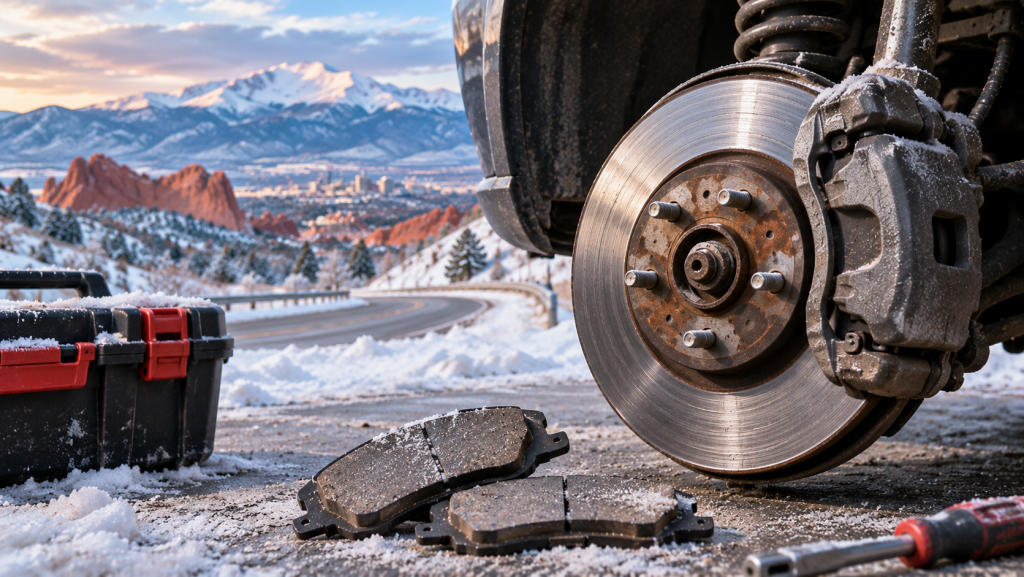
Colorado Springs sits at the foot of the Rockies, and that means hills, grades and winding roads in nearly every direction. In summer, those slopes are scenery. In winter, with snow, ice and bitter cold, they become a test of your car’s brakes. Every descent asks the brakes to control a lot of weight on a slick surface, and every stop on an icy incline reminds you how much you depend on them. Winter driving also tends to wear brakes faster, hide small problems until they get bigger and make a minor issue much more dangerous. This guide explains why hilly winter driving is hard on your brakes, the warning signs to watch for, what a good brake inspection covers and how to brake more safely on ice. If you are searching for a brake inspection in Colorado Springs before the snow gets serious, start here.
Why Hills and Winter Are a Tough Combination
Brakes work by converting motion into heat through friction. On a steep downhill, your brakes have to absorb a lot of energy to keep the car at a safe speed, and they can heat up quickly if you rely on them for long stretches. On snow and ice, the tires have far less grip, so every braking input has to be gentler and more deliberate, and the car takes much longer to stop. Add road salt, magnesium chloride and grit, which can promote corrosion on brake parts, and cold temperatures that stiffen rubber seals and thicken fluids, and you have a system working under unusually heavy demands.
Winter also exposes problems that may not be noticeable in good weather. A caliper that sticks a little, a worn pad or a leak in a brake line may not bother you on dry pavement. On ice, the same problem can mean the difference between stopping in time and not.
How Winter Wears Down Brakes
- Extra braking on descents. Steep grades mean more brake use and more heat, which speeds up pad and rotor wear.
- Corrosion. Road treatments can attack rotors, calipers, brake lines and hardware. Rust can make parts stick or wear unevenly.
- Moisture and brake fluid. Brake fluid absorbs moisture over time, which can lower its effectiveness and contribute to corrosion inside the system.
- Stuck or slow moving parts. Cold, dirt and corrosion can make calipers and slides stiff, causing uneven wear or dragging brakes.
- Grit and slush. Debris thrown up from the road can work into brake components and cause noise and wear.
- Hidden wear. A car that has been working hard on slippery surfaces may have worn pads that you have not noticed yet.
Warning Signs Your Brakes Need Attention
Do not wait for a close call. If you notice any of the following, have your brakes inspected soon:
- Squealing or squeaking. Many pads include a wear indicator that squeals when the pads get thin. Some noise in cold, damp weather can be normal, but a constant squeal is worth checking.
- Grinding or growling. This can mean the pads are worn down to the metal and are damaging the rotors.
- A soft, spongy or sinking pedal. This can point to air or moisture in the lines, a leak or another hydraulic problem.
- A hard pedal or extra effort. The power assist may not be working properly.
- Vibration or pulsing when braking. This often points to uneven rotors or other worn parts.
- Pulling to one side. A sticking caliper, a worn hose or uneven pads could be the cause.
- A brake or anti lock warning light. Check your owner’s manual for what each light means for your vehicle.
- Burning smells or smoke after long downhill stretches. The brakes may be overheating.
- Fluid leaks. Brake fluid near the wheels or under the car is a serious warning sign.
- Longer stopping distances. If the car takes longer to stop than it used to, trust your instincts.
What a Winter Brake Inspection Should Include
A good inspection goes beyond a quick look at the pads. A technician will usually check:
- Pads and shoes for thickness, even wear and glazing.
- Rotors and drums for wear, scoring, rust and warping.
- Calipers and slides for sticking, leaks and corrosion.
- Brake lines and hoses for cracks, rust, bulges and leaks.
- Brake fluid level and condition.
- The parking brake for proper operation.
- The anti lock system and warning lights.
- Tires. Brakes can only do so much if the tires cannot grip, so tread depth and condition matter too.
Based on what turns up, the recommended work might include new pads, resurfaced or replaced rotors, caliper service, a brake fluid flush or replacing a worn line or hose. A good technician will explain what needs attention now and what can wait.
To get ready for the rest of the season, our winter car prep FAQ for Colorado Springs covers other key checks, from the battery to tires and fluids.
Don’t Forget the Tires
Your brakes slow the wheels, but your tires stop the car. On ice and snow, tire condition can matter as much as brake condition. Check the tread depth, look for damage and keep the pressure at the level recommended on the sticker inside the driver’s door or in your owner’s manual. Cold weather lowers tire pressure, so check it often. If you drive in snow regularly, ask a technician whether winter tires make sense for your vehicle. Good tires and good brakes work together.
How Elevation Plays a Role
Colorado Springs sits at a high elevation, and that affects more than your breathing. Thin air changes how engines perform and how some systems behave, and it is one more reason a car can feel different here. Our post on how elevation changes affect your car’s engine performance explains the engine side of the story. Brakes are not directly changed by elevation in the same way, but the steep roads that come with living near the mountains put them to heavy use, especially when a descent is slick.
Braking Safely on Ice and Snow
Even a perfect brake system has limits on a slippery road. These habits help you stay in control:
- Slow down early. Reduce speed before you reach a hill, a curve or an intersection, not after.
- Increase following distance. Stopping on ice can take much farther than on dry pavement, so leave extra space.
- Brake gently and smoothly. Sudden braking can lock the wheels or upset the car.
- Know your anti lock brakes. If your car has them, firm, steady pressure is usually recommended in an emergency, and you may feel the pedal pulse as the system works. Check your owner’s manual for what is right for your vehicle.
- Use a lower gear on long descents. This lets the engine help control speed, so the brakes are not doing all the work. Your owner’s manual explains how to do this in your type of vehicle.
- Do not ride the brakes downhill. Constant light braking creates heat. Slow down early, then let the car roll in a lower gear.
- Be careful on shaded areas and bridges. Ice can linger in spots that never see the sun.
- Do not use cruise control on slippery roads.
- Stay home when conditions are bad, if you can.
Can You Keep Driving With Brake Problems?
When it comes to brakes, it is best not to take chances. A faint squeal that comes and goes may allow time to schedule service soon. But grinding, a soft or sinking pedal, pulling, leaking fluid, smoke or a warning light are reasons to have the car checked right away, and in some cases to stop driving it. If you are unsure whether it is safe, play it safe and call a professional. This matters even more on icy hills, where there is little room for error.
How a Mobile Mechanic Can Help
Driving a car with questionable brakes to a shop on icy roads is the last thing you want to do. A mobile mechanic can come to your home or workplace, inspect the brakes and explain what is needed, and handle many common brake repairs on site. That makes it easier to deal with a problem before the next storm. Some brake work needs specialized equipment and may require a shop, and a good technician will be honest about what can be done where your car is parked.
Quick Pre Winter Brake Checklist
- Listen for squealing, grinding and other new noises.
- Notice any change in pedal feel.
- Watch for pulling, vibration and longer stopping distances.
- Check for warning lights and fluid leaks.
- Have the pads, rotors, calipers, lines and fluid inspected.
- Check tire tread, condition and pressure.
- Practice gentle braking and leave extra space on slick roads.
Winter hills are no place to find out your brakes are not up to the job. If you would like a technician to look them over before the next snow, visit our homepage to learn more, or contact us to schedule a visit.