
Colorado Springs sits more than six thousand feet above sea level, and while most drivers notice the altitude affects their own breathing on a hike up to Garden of the Gods or along the trails near Pikes Peak, far fewer think about how it affects their vehicle. Your car’s engine is essentially a large air pump that needs a specific mix of air and fuel to run efficiently, and at this elevation, the air itself is simply different than what most vehicles were originally tuned for at lower altitudes.
Why Thinner Air Changes How Your Engine Runs
At higher elevations, the air is less dense, which means each breath your engine takes in contains fewer oxygen molecules than the same volume of air would at sea level. Since combustion depends on the right ratio of air to fuel, a naturally aspirated engine operating at Colorado Springs elevation is working with roughly twenty percent less oxygen than it would have available near the coast. This has a direct effect on horsepower, torque, and overall engine efficiency, especially in older vehicles that rely on simpler fuel delivery systems.
Modern vehicles with computer controlled fuel injection are generally able to compensate for this automatically, adjusting the fuel mixture to match the reduced oxygen available. Older carbureted vehicles, or those with less sophisticated engine management systems, often struggle more noticeably, sometimes running rich because the fuel mixture calibrated for sea level delivers too much fuel relative to the thinner air actually available at altitude.
The Real Effects Drivers Notice
Most Colorado Springs drivers who have lived at lower elevations before moving here notice a few things fairly quickly. Acceleration can feel slightly less responsive, particularly in vehicles without turbochargers, since naturally aspirated engines lose a noticeable percentage of their rated horsepower at this altitude. Fuel efficiency can also shift, sometimes improving slightly in modern vehicles due to reduced air resistance and adjusted fuel mapping, while older vehicles may see reduced efficiency from an improperly balanced air to fuel ratio.
Turbocharged engines tend to handle elevation changes better than naturally aspirated ones, since the turbocharger compresses incoming air before it reaches the engine, partially compensating for the reduced oxygen density. This is one of the reasons many manufacturers have shifted toward turbocharged engines in recent years, and Colorado Springs drivers with these vehicles often notice a smaller performance difference compared to friends or family driving naturally aspirated cars of similar size.
What Elevation Means For Regular Maintenance
Elevation does not just affect performance while you are driving, it also has implications for ongoing maintenance. Air filters can experience different dirt and debris patterns depending on local terrain and driving conditions, and it is worth having yours checked a bit more frequently if you spend a lot of time on dirt roads or trails around the region. Spark plugs designed for sea level operation can sometimes show different wear patterns at altitude due to the adjusted combustion process, so it is worth mentioning your elevation to a technician during a routine service so they can watch for anything unusual.
Cooling systems deserve attention too. Thinner air provides less cooling effect for your radiator compared to denser air at sea level, which means your cooling system may need to work a bit harder to maintain proper engine temperature, particularly during summer drives or when climbing significant grades on routes like Highway 24 toward Woodland Park.
Brakes Work Harder Here As Well
Colorado Springs is not just about elevation itself, it is also about the terrain that comes with it. Steep grades heading toward the mountains put extra strain on braking systems, since descending drivers rely heavily on brakes to control speed on long downhill stretches. Combined with the already demanding local terrain, this makes regular brake inspections especially important for drivers here. Our article on why Colorado Springs drivers need regular brake inspections goes into more detail on how local terrain accelerates brake wear and what signs to watch for before a problem becomes serious.
Signs Your Vehicle May Be Struggling With The Elevation
A few signs suggest your car might not be adapting well to Colorado Springs elevation. Noticeably reduced power when climbing hills, rough idling that seems more pronounced than it used to be, a check engine light that appears specifically during periods of hard acceleration, or unusually high fuel consumption compared to what the vehicle achieved at a lower elevation are all worth having checked. In many cases these issues point to a sensor or fuel delivery component that needs recalibration or repair rather than anything seriously wrong with the engine itself, but they should not be ignored since they tend to get more noticeable over time rather than resolving on their own.
It is also worth mentioning that tire pressure can behave a bit differently at this elevation, since the reduced atmospheric pressure outside the tire affects the relative pressure reading compared to what you might be used to at sea level. It is a small factor, but combined with Colorado’s wide seasonal temperature swings, it means checking tire pressure regularly is more important here than in a climate with less variation. Underinflated tires not only wear unevenly, they also reduce fuel efficiency, compounding an issue that altitude may already be affecting in older vehicles.
Why A Mobile Mechanic Understands These Local Conditions
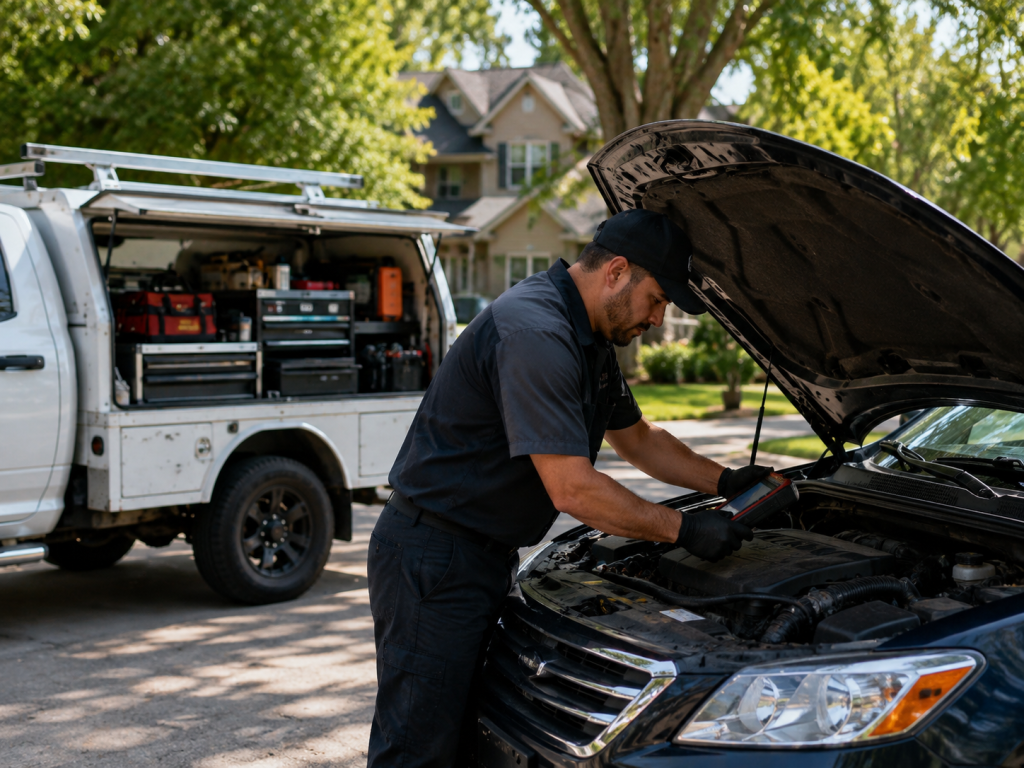
A technician who works regularly in Colorado Springs understands how elevation interacts with engine performance, cooling, and braking in a way that a generic repair guide simply cannot capture. Rather than driving to a shop and explaining your symptoms to someone who may not be familiar with how local conditions affect vehicles, a mobile mechanic who already services this area day in and day out can come to you and diagnose issues with that local context already built in.
We covered the broader benefits of this approach in our article on why mobile mechanics are better than traditional auto shops in Colorado Springs, which explains how convenience and local knowledge come together to make mobile service a strong option for drivers throughout the area.
Keep Your Vehicle Running Well At Altitude
Living and driving at elevation is simply part of life in Colorado Springs, and while it does change how your vehicle performs, most of the effects are manageable with a bit of awareness and regular maintenance. Understanding how thinner air affects your engine, your brakes, and your cooling system gives you a better sense of what symptoms are worth paying attention to before they turn into bigger repairs. This is especially true for anyone new to the area, since a vehicle that ran perfectly at sea level can behave in slightly unfamiliar ways once it spends its first full year at this elevation.
If you have noticed any changes in performance, fuel efficiency, or braking since moving to the area or simply want a checkup that accounts for local elevation, visit our homepage to learn more about our services, or reach out through our contact us page to schedule a visit at your home or office.
A quick inspection now can help you understand exactly how your vehicle is handling the altitude, and catch any small issues before Colorado’s terrain and elevation turn them into something more expensive.